PANELS
Below you’ll find an overview of the conference panels, each designed to explore key themes and spark insightful discussion. Go to any panel to view its description and featured speakers. We invite you to browse the sessions below and choose the conversations that best align with your interests.
Crisis & policymaking
Convenors

Lydie Cabane is senior Assistant Professor at the Institute for Security and Global Affairs.

Federico Toth is Full Professor of Political Science at the University of Bologna. His main research interests include comparative health policy, policy-making analysis and crisis management.
panel participants
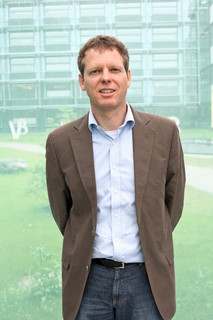
Christoph Knill is Full Professor of Politics and Public Administration.
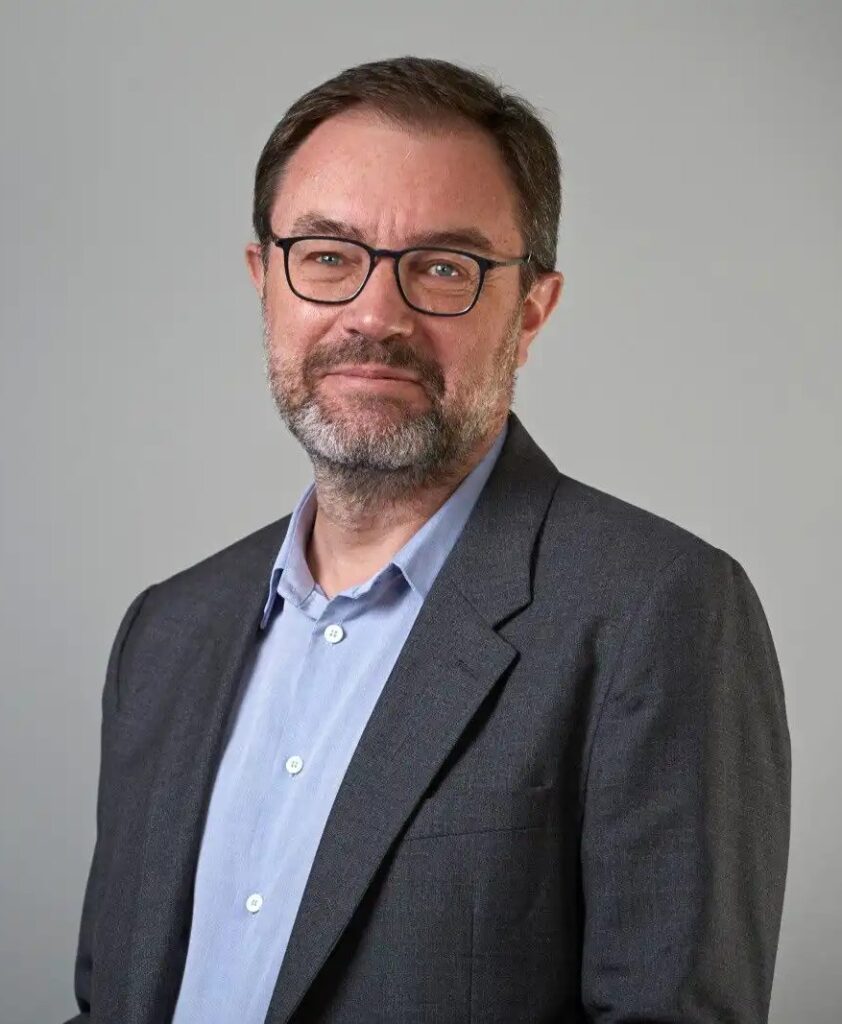
Olivier Borraz is
CNRS Research Professor at the Centre for the Sociology of Organisations (CSO), Crisis-Lab
Giliberto Capano is
Professor of Political Science and Public Policy at the University of Bologna
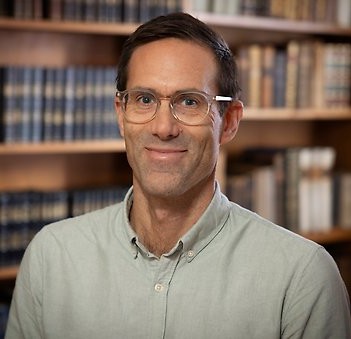
Daniel Nohrstedt is Professor in Political Science at Uppsala University.

Charles Parker is Professor of Political Science at Uppsala University.
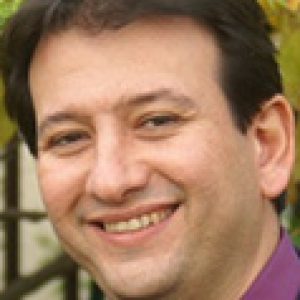
Philippe Zittoun is Research Professor in political Science at the University of Lyon

Laura Mastroianni is a Postdoctoral Research Fellow in Public Policy in the Department of Political and Social Sciences of the University of Bologna.

Hazal PEHLİVAN is a Postdoctoral Researcher in Public Policy, Crisis Governance & Decision-Making at Leiden University
ABout
Crises and policy-making are fundamentally related. Public policies can cause crises; crisis management is essentially a policy making activity: policies are in place to deal with crises, or policies get disrupted by crises. In return, crises affect policy-making, either by precipitating changes or through their repeating occurences by transforming the normal conditions of policy-making.
Societal Resilience: Resisting Malign Foreign Interference
Convenor

Beatrice de Graaf is a historian and a security, crisis & terrorism researcher. She is also the Scientific Director at Adapt!
panel participants

Bart Schuurman is Professor of Terrorism and Political Violence at the Institute of Security and Global Affairs, and head of the research group by the same name.
panel participants

Sarah de Lange is Professor of Dutch Politics at the Institute for Political Science.

Larissa Böckmann holds a Master’s degree in Empirical Research on Democracy and a Bachelor’s Degree in Political Science and Philosophy from the University of Mainz. During her studies, she acquired international experience in Spain and Colombia and work experience with different NGO’s.
Sense and meaning making in times of crisis: An applied history perspective
beatrice de graaf (Utrecht university)
Convenor
Beatrice de Graaf is a historian and a security, crisis & terrorism researcher. She is also the Scientific Director at Adapt!
panel participants


Ruben Ros is a postdoc at Adapt! and focuses on digital-historical research into crisis dynamics. What happens to public thought and discourse after major events? When can we speak of a crisis, and what kind of language is associated with it? Ruben Ross will talk about Mapping Crisis narratives across the modern age.

Mathijs van der Loo is a PhD student at Adapt! In his PhD research, he studies Dutch charity culture during the cholera epidemics (1830-1900).

Claudia Morsut is an
Associate Professor at University of Stavanger
Responsibility as Principle: What did we learn from managing COVID-19?
convenor

Rasmus Dahlberg Is Associate Professor at the Department of Social Sciences and Business Centre for Societal Security and Resilience (SECURE) at Roskilde University
panel participants

Andreas Hagedorn Krogh is Associate Professor at the Department of Social Sciences and Business
Roskilde School of Governance
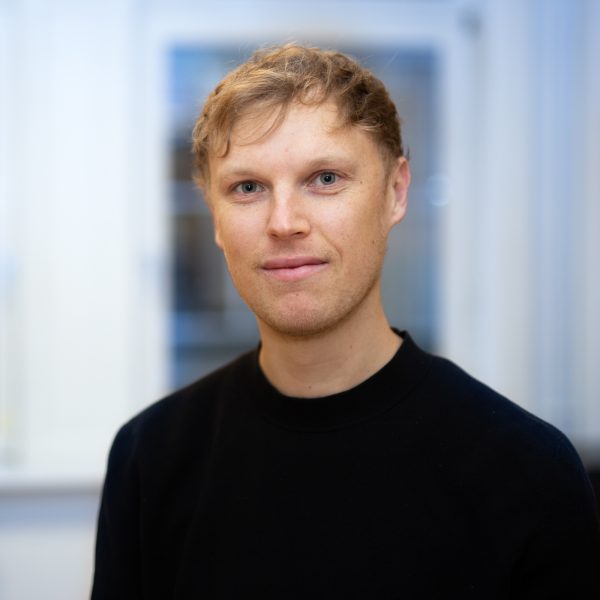
Svante Aasbjerg Thygesen is a PhD student affiliated with the Center for Societal Security and Resilience (SECURE) and Roskilde School of Governance at Roskilde University.
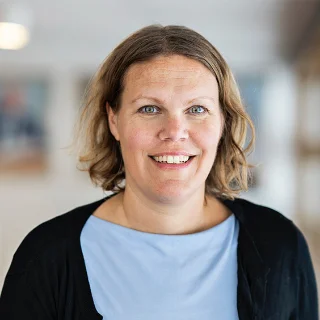
Kerstin Eriksson is an Senior Lecturer at the Department of Design Sciences, LTH, Lund University.
about
When COVID-19 hit the in early 2020, a Nordic crisis management principle known as the responsibility principle (a principle of decentralized preparedness planning and crisis management stating that whoever is in charge during normal times also has the responsibility in extraordinary situations) was tested: managing a full-scale crisis response across virtually all societal sectors and with an open-ended timeline which stretched for months and, as it turned out, years. After the pandemic, Danish, Swedish, and Norwegian government commission reports all concluded that the responsibility principle had to some extent been challenged by either strong or absent political leadership, centralized as well as decentralized decision-making and strategic, top-down direction-setting competing with local autonomy in various combinations and measures in the three countries. Based on findings from RESECTOR, a NordForsk-funded project 2023-26, this panel asks what we learned about responsibility from managing the most severe societal crisis since the Second World War?
The Politics of Detection (celebrating Barry Turner)
Arjen boin (leiden university)
Convenor

Arjen Boin is Professor of Public Institutions and Governance at the Institute of Political Science. He is also a senior partner at Crisisplan and academic advisor at Adapt!
panel participants
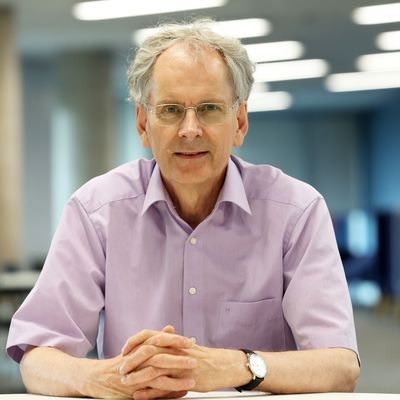
Nick Pidgeon is Professor of Environmental Psychology and Risk at Cardiff University.
Nikki Ikani is Assistant Professor Intelligence and Security at Leiden University.

Tjorven Harmsen works for the German Aerospace Center (DLR). Her research is based at the Institute for the Protection of Maritime Infrastructures (DLR-MI).

Kristin Sørung Scharffscher is an Associate Professor at the University of Stavanger specializing in societal safety, risk management, and crisis communication..
Charles Parker is Professor of Political Science at Uppsala University.

Tricia Wachtendorf, Ph.D., is a professor of sociology at the University of Delaware and director of UD’s world-renowned Disaster Research Center.
Fredrik Bynander is the Acting Director General for Crisis Management at the Swedish Government
About
Crisis detection is a mysterious capacity. We can assume that many public organizations routinely detect emerging crises and nip them in the bud. But after a major crisis, there are always indications that crisis detection failed in ways that appear both stunning and unbelievable. Barry Turner formulated a powerful theory explaining why organizations can miss an emerging crisis (in his book Manmade Disasters, a second edition was published with Nick Pidgeon). In this panel, we revisit this work and contemplate the secrets of crisis detection.
Crisis meaning-making (Framing)
Thijs van Dooremalen(Leiden University)
Convenor

Thijs van Dooremalen is Assistant Professor at Institute of Security and Global Affairs, at Leiden University. His research focuses on how and why events can cause transformations within national public spheres (media, politics, policy making).
about
Crises come into being through meaning-making processes: whether events or situations are considered crises, how they should be tackled, and what future lessons could be taken from them are all matters of ‘framing contests’. This panel is open to papers studying these processes from different academic backgrounds, using a diversity of methods, and a variety of crisis cases. Possible research questions could be: What determines who wins crisis framing contests? How is this impacted by institutions, types of crises, or country contexts? How do framing contests differ across crisis stages (e.g., preparedness, responses, mitigation)?
PANEL PARTICIPANTS

Assem Dandashly is Associate Proffesor Political Science at Maastricht University.

Daniel Laufer, is a Professor and Head of the School of Communication Studies at the Auckland University of Technology (AUT).
Nada Afa is a PhD Candidate in Political Science and Conflict at the Radboud University Nijmegen.

Gergana Noutcheva is Associate Professor in International Relations and European Foreign Policy at the Political Science Department of Maastricht University.
panel participants

Stijn Willem van ’t Land works as a researcher and PhD candidate for the Institute of Security and Global Affairs (ISGA). He will talk about the factors and mechanisms through which foreign terrorist attacks turn into domestic crises

Ioana Sendroiu is Assistant Professor of Sociology at the University of Hong Kong. Iona will discuss how big oil companies are seeking to settle climate crisis claims

Wouter Jong got his PhD at Tilburg University. He is a crisis management and crisis communication consultant. Wouter will discuss how crises reshape the way organizations are publicly compared and evaluated

Yijing Wang, is Full Professor and Chair of Strategic Communication, with a focus on Responsible and Sustainable Organisations and Business in the Department of Media and Communication at Erasmus University Rotterdam.
The Ethics of Crisis Management
Rik Peels (Vrije Universiteit amsterdam)
Convenor

Rik Peels is Professor of Philosophy and Theology of Radicalization at the Faculty of Religion and Theology of the Vrije Universiteit Amsterdam. He is also the chairman of the International Scientific Advisory Board of Adapt!
About
This panel is dedicated to the study of leaders’ moral decision-making during crises. It presents empirical data, both qualitative and quantitative, on how moral decisions are made by crisis managers. It also presents more theoretical work: which ethical and meta-ethical theories, concepts, arguments, and tools apply to and are useful for crisis management? Finally, it presents normative, particularly ameliorative, work: how can we improve on ethical decision-making during crises, which guidelines can we formulate, and what can we do to ensure that they are actually fruitfully implemented?
panel participants

Tanja Hendriks is an assistant professor at the Institute of Security and Global Affairs and a research affiliate with the African Studies Centre Leiden.

Bernardo Reis dos Santos is a doctoral student at Leiden University. He is interested in Social and Political Philosophy, Applied Ethics, and Philosophy.

Shoshanah van de Vosse is doctoral student at Vrije Universiteit Amsterdam. Her
research focuses on the ethical dimensions of leaders’ decision-making in times of crisis.
Secrets of societal resilience
Jori Kalkman (Wageningen university &research)
Convenor

Jori Kalkman is an Associate Professor at Wageningen University & Research. His research focuses primarily on crisis management, disaster response and societal resilience.
about
Governments across the globe are adopting plans to build more resilient societies. Classic crisis management studies provide helpful building blocks through research on citizen responses to disaster, differences in vulnerability among various social groups, and spontaneous support from emergent volunteer groups. In this panel, we build on these classic insights to take research on societal resilience into the new era.
Find out more information about this panel here.

Kees Boersma is Full Professor of socio-technical innovation and societal resilience in Faculty of Social Sciences (at the Department of Organization Sciences) and the Faculty of Science (at the Science, Business & Innovation group) at the Vrije Universiteit Amsterdam

Nathan Clark is an Assistant Professor within the Department of Organization Sciences at Vrije University Amsterdam.

Anastasiia (Nastya) Poberezhna is a PhD Fellow at the Institute of Security and Global Affairs (ISGA) at Leiden University
panel participants
Claudia Morsut is an
Associate Professor at University of Stavanger

Jesse Michael Millek is an ancient historian and archaeologist specializing in the history and cultures of the Eastern Mediterranean during the Late Bronze Age.

Oscar Nowlan is a PhD candidate at the Department of Government, London School of Economics and Political Science and Research Fellow at LSE Cities.

Martin Lodge is professor of political science and public policy at the London School of Economics (LSE)

Kati Orru is Associate Professor in Sociology of Sustainability, Institute of Social Studies at University of Tartu, Estonia

Sten Hansson is Associate Professor of Communication Studies at the University of Tartu.

Lihi Lahat is
Associate Professor in the Department of Public Administration and Policy at Sapir Academic College, Israel, and an Affiliate Associate Professor in the Department of Political Science and the Azrieli Institute of Israel Studies at Concordia University, Montreal.
The Robust Governance of Turbulence
Convenors

Christopher K. Ansell is a political scientist, academic, and author. He is a professor of Political Science at the University of California, Berkeley.
Convenors

Jacob Torfing is professor in Politics and Institutions and Research Director of Center for Democratic Network Governance.

Eva Sørensen is professor of Public Administration and Democracy at Roskilde University. She is currently the Vice-director of Roskilde School of Governance.
About
This panel introduces the concept of turbulence as analytical lens for understanding the complex and variable dynamics associated with both crisis and non-crisis situations and examines the different causes of growing societal turbulence. By posing a challenge to public governance, turbulence creates an imperative for both stability and change. The panel develops the idea of “robustness” (as opposed to reliability or resilience) as the critical property of systems that enables them to successfully adapt to turbulence. The panel then explores organizational and political strategies for achieving robust governance.
Preparing Together? EU–NATO Cooperation in Civil Defence and Societal Resilience
convenor

Mark Rhinard is Senior Research Fellow at the Europe Research Program at UI. His research focuses on European cooperation questions, especially in the areas of external and internal security.
panel participants

Niels van Willigen is Professor by Special Appointment in Strategic Studies at the Institute of Political Science.

Dr. Naďa Kovalcikova, Senior Fellow, Montreal Institute for Global Security
Roy de Ruiter, Professor by Special Appointment in Maritime Strategy at Leiden.
about
Civil defence and societal resilience have moved to the centre of European security. The EU and NATO each provide essential parts of the preparedness puzzle, but neither can deliver them alone. NATO’s role in deterrence, defence planning, and civil preparedness increasingly depends on capabilities, infrastructures, and regulatory instruments associated with the EU. The EU’s preparedness agenda, meanwhile, operates within a security environment still structured largely through NATO. Against a backdrop of geopolitical and transatlantic strain, this panel examines how the two organisations can combine their distinctive strengths, where cooperation remains difficult, and what civilian and military approaches to preparedness can learn from one another.
From Signal to Action: Governing Early Warning in Transboundary Crisis Environments
convenor

Magnus Ekengren is Professor of Political Science at the Swedish Defence University in Stockholm.
Magnus is a former Swedish diplomat and was previously Deputy Director at the Policy Planning Unit of the Swedish Ministry for Foreign Affairs, where he dealt with EU enlargement and institutional reform, the Common Foreign and Security Policy and the Common Security and Defence Policy.
about
From Signal to Action: Governing Early Warning in Transboundary Crisis Environments
Many classical challenges of crisis management now unfold across political, sectoral, and geographical boundaries. One such challenge is early detection of emerging crises (the identification and interpretation of weak signals before escalation) paired with timely intervention. From pandemics and terrorism to disinformation and climate risks, acting across boundaries has become increasingly complex. In cooperative governance systems such as the EU and NATO, early warning relies on pooled information, shared sense-making, and coordinated pathways that help move from signal to action. This panel will bring together scholars and practitioners to explore what classical theorizing has to say about how transboundary detection and intervention can be organized for reliability and legitimacy.
Convenors: Magnus Ekengren & Mark Rhinard
For paper proposals, contact Magnus Ekengren
panel participants

Aline Bartenstein is a political scientist and postdoctoral researcher at the Chair of Sustainability Transition Policy at the Friedrich-Alexander-Universität Erlangen-Nürnberg (FAU).
Nikki Ikani is Assistant Professor Intelligence and Security at Leiden University.

Andrea Wiegman (1973) is a historian and foresight expert. She works for the Dutch Ministry of Finance, the Tax Authorities, and the FIOD, searching for early signals and blind spots in detecting new financial fraud or violations of integrity

Sara Talebian is a Research Fellow at SEI Headquarters, International Climate Risk and Adaptation Team, Global Agendas, Climate and Systems Division.

Eva Michaels is an assistant professor in intelligence and security at Leiden University and a senior fellow at the Barcelona Institute of International Studies. Her research explores how European actors anticipate and respond to recent security crises.

Dan Hansén is an Associate professor in Department of Political Science at Swedish Defence University.
AI and Digital Transformation in Crisis Governance
Babak Rezaeedaryakenari
Convenor

Dr. Babak RezaeeDaryakenari is an associate professor in the Institute of Political Science at Leiden University, specialising in geopolitics and political power.
About
Artificial intelligence and digital decision-support systems are reshaping how governments anticipate, interpret, and respond to crises. This panel explores how data-driven technologies influence leadership under uncertainty, institutional coordination, and public accountability in emergency contexts. Rather than focusing solely on technical capabilities, the discussion centers on how AI transforms crisis governance itself by reconfiguring authority, responsibility, and legitimacy in moments of high political and societal stakes.
Panel participants

Louise K. Comfort is Professor and former Director, Center for Disaster Management, Graduate School of Public and International Affairs, University of Pittsburgh.

Eric K. Stern is a professor at the College of Emergency Preparedness, Homeland Security and Cybersecurity, the director of the AI & Society Research Center, and the interim co-director of the Center for Emerging Artificial Intelligence Systems (CEAIS), at the University at Albany.

James Kendra is a director of the Disaster Research Center and a professor of public policy and administration at the University of Delawere.
Resilience and neighbouring concepts: a multidisciplinary perspective
About
As the concept of resilience has gained prominence across crisis management studies, organizational research, and public policy, it has often been mobilized as a catch-all explanation for how organizations and societies cope with, adapt to, and recover from disruption. While this diffusion has enhanced its visibility, it has also contributed to conceptual ambiguity and analytical overlap with a range of closely related ideas.
This track hosts contributions that revisit organizational and societal resilience through the lens of classic works and foundational debates in crisis management and neighbouring fields. In line with the overall aim of the conference to re-anchor the field in its intellectual roots, the track encourages authors to reflect on how resilience connects to, diverges from, or builds upon established concepts such as crisis detection, decision-making under pressure, high reliability, turbulence. Contributions are further invited to examine resilience from different analytical perspectives, including networks, institutionalism, agency, power and politics, and to discuss its relevance for broader concerns such as innovation, and ethics.
The track is structured around three interrelated sessions, each corresponding to a distinct level of analysis through which resilience and its neighbouring concepts can be revisited and re-anchored in classic crisis management debates.
Panel participants session 1

Christopher Ansell is Professor of Political Science. He is also a Fellow of the National Academy of Public Administration and the Faculty Director of Berkeley’s Center for Catastrophic Risk Managemen
Arjen Boin is Professor of Public Institutions and Governance at the Institute of Political Science. He is also a senior partner at Crisisplan and academic advisor at Adapt!

Tanja Klenk is a Professor of Public Administration and Public Policy at the Helmut-Schmid-University Hamburg. Her principal research interests lie in the field of the governance and administration of the welfare state and comparative social policy.

Rómulo Pinheiro is Professor of Public Policy and Administration, Deputy Head of Department and member of the research group on Public Governance and Leadership (GOLEP). He is a co-track coordinator at the Digital Transformation (CeDiT) based at UiA.

Maria Laura Frigotto is Full professor of Organization Studies, University of Trento.
Panel participants session 2

Elke Loeffler is Director of the non-profit organisation Governance International and Associate at the UK’s University of Birmingham.
Tanja Klenk is a Professor of Public Administration and Public Policy at the Helmut-Schmid-University Hamburg. Her principal research interests lie in the field of the governance and administration of the welfare state and comparative social policy.
Rómulo Pinheiro is Professor of Public Policy and Administration, Deputy Head of Department and member of the research group on Public Governance and Leadership (GOLEP). He is a co-track coordinator at the Digital Transformation (CeDiT) based at UiA.
Maria Laura Frigotto is Full professor of Organization Studies, University of Trento.

Veronika Vakulenko is a Associate Professor at the Nord University Business School of Nord University. Her research directions are public sector management, in particular public accounting, budgeting, finance and auditing; performance measurement; reforms

Dr. rer. pol. Hans-Jürgen Bruns of Leibniz Universität Hannover. His research focuses on public sector accounting and accountability, public value management and strategy, public service motivation, and qualitative research methods in public sector accounting.
new approaches for studying crisis decision making
Ellen giebels
Convenor

Ellen Giebels is professor of Conflict and Security at the University of Twente. She is director of data quality, methods and ethics at Adapt!
About
This panel presents work-in-progress on a new Societal Crisis Response Challenge: a strategic-level simulation designed to confront teams with the societal register of a crisis, such as eroding trust, contested narratives, societal unrest and communities that feel unseen. This outward-facing, socially steering form of strategic crisis response is often lacking in both training and research. Built around a scenario drawn from a currently high-profile crisis type, the so-called climate whiplash, the exercise asks strategic teams not just to manage the immediate response in terms of technical and logistical issues, but to navigate the social fabric under strain.
Rather than a finished product, this session is designed as a conversation catalyst: panelists and the audience are invited to react to the scenario developed so far, question the format, and help shape the design questions that will guide the next phase of this work. The discussion will also draw on developments in psychology, technology and business administration, questioning some of the taken-for-granted quality criteria for crisis responses (for instance through a decision-corridor approach), and opportunities for including biophysiological measures, technology tracking group processes as they unfold, and a ‘challenge-format’, aimed at increasing participant involvement, exercise realism, and the overall learning experience.
panel participants

Miriam S.D. Oostinga is Assistant Professor, Department Psychology of Conflict, Risk and Safety at the University of Twente.

Marij Swinkels is Assistant professor at the Utrecht School of Governance (USG) of Utrecht University.

Rico Kerstan is a
Reseach Fellow at NBS Northern Business School
Freek Bucx, Netherlands Institute for Social Research (SCP)

Frank Gootjens, Netherlands Institute for Social Research (SCP)
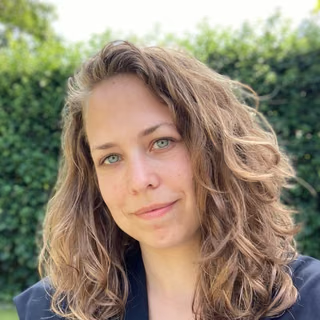
Janneke Overduin, University of Twente.
The political consequences of crisis management
convenors

Lydie Cabane is senior Assistant Professor at the Institute for Security and Global Affairs. Her main interests include crises, governance, public policy, states, expertise, European Union and global politics.

Vasiliki (Billy) Tsagkroni is Senior Assistant Professor of Comparative Politics at the Institute of Political Science.
panel participants
Olivier Borraz is
CNRS Research Professor at the Centre for the Sociology of Organisations (CSO), Crisis-Lab
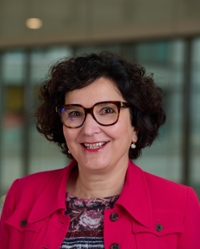
Antoaneta Dimitrova is Professor at Institute of Security and Global Affairs at Leiden University

Nena Oana is an Assistant Professor at the University of Amsterdam within the Political Economy and Transnational Governance programme group.

Rasa Bortkevičiūtė is the Head of Science and Research Department at the Institute of International Relations and Political Science at Vilnius University
about
Crises are moments of rupture, but also of political transformation. While classical crisis research has examined the politics of crisis management, recent research now call for systematising the reverse question: how does crisis management reshape politics itself?
This panel examines how crisis management reshapes political authority, legitimacy, accountability, and state-society relations across policy domains, levels of governance, and over the long term. It is particularly interested in three clusters of questions. First, how do emergency powers, executive discretion, and the rise of expert authority reconfigure democratic accountability and state-society relations? Second, what kind of politics emerge from crisis and the ‘crisisification’ of policy-making? For example, how do crisis communication strategies affect political trust, polarisation, and public compliance? Third, it is time to revisit classical questions about crisis and power in light of contemporary experience: when do crisis interventions consolidate incumbent power, and when do they open windows for reform, institutional learning, or contestation? Under what conditions do temporary measures become permanent features of governance, and with what consequences for democratic legitimacy?
By bringing diverse methodological and theoretical perspectives into dialogue, the panel aims to build bridges across crisis research and political science, and to outline a comparative agenda for studying how governing under pressure transforms the political landscape over time.
This initiative is organized under the support of the ECPR Network on the Politics of Crisis Management.
Interested in presenting a paper in this panel? Please contact Vasiliki (Billy) Tsagkroni (v.tsagkroni@fsw.leidenuniv.nl) and/or Lydie Cabane (l.d.cabane@fgga.leidenuniv.nl)
Incorporating AI and Other Technologies in Crisis Management
Tanya B. Corbin
Convenor
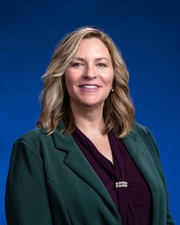
Tanya Buhler Corbin is Professor of Disaster Management and Department Chair, Emergency, Disaster and Global Security Studies, Embry-Riddle Aeronautical University Worldwide.
PANEL PARTICIPANTS
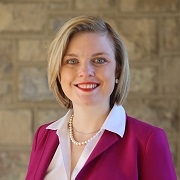
Iuliia Hoban is Assistant Professor of Human Security and Resilience, Embry-Riddle Aeronautical University.
Jialing Huang, Assistant Professor of Communication, Embry-Riddle Aeronautical University.
about
Building resilience for transboundary crises through emerging digital technologies
This interdisciplinary panel examines how learning and adaptation during crises are reshaped by emerging digital technologies, particularly artificial intelligence, examined in the context of classic theoretical foundational works in crisis management studies. Drawing on seminal works on sensemaking (Weick, 1995; Boin, McConnell, ‘t Hart, 2021), social amplification of risk (Kasperson et al., 1988; Tierney, 2014), and resilience and adaptation in crisis contexts (Weick & Sutcliffe, 2015), the papers explore how artificial intelligence and digital innovations influence learning, sense-making, and resilience. Across different geopolitical, cultural, and generational contexts, the contributions show that crisis learning is not neutral or automatic, but socially conditioned and politically embedded. Public engagement with AI-assisted crisis communication reveals how trust, meaning-making, and perceived legitimacy are filtered through national identity, political ideology, and crisis type, challenging assumptions of objectivity. At the same time, digital innovations such as AI-supported mentorship illustrate how adaptive learning and resilience can be cultivated over time among conflict-affected youth by strengthening social capital and relational support. However, we are early in our use and understanding of the effects of AI tools on human cognition; the Logos et.al. paper investigates potential advantages and limitations of AI assisted crisis management. By integrating classic crisis and resilience theories with contemporary challenges posed by AI and prolonged crises, the panel highlights how learning emerges through contested interpretations, adaptive practices, and evolving relationships between humans and technology.
PANEL PAPERS
Fostering Youth Resilience and Integration during Crises: Insights from Digital Innovation Mentorship Initiatives with Conflict-Affected Ukrainian and Turkish Youth
Iuliia Hoban, Assistant Professor of Human Security and Resilience, Embry-Riddle Aeronautical University.
Cihan Aydiner, Assistant Professor of Homeland Security, Embry-Riddle Aeronautical University.
Tanya Buhler Corbin, Professor of Disaster Management and Department Chair, Embry-Riddle Aeronautical University.
Traditionally, (re)settlement has been viewed as the final stage of displacement, requiring migrants to adapt to new sociopolitical environments. This study reconceptualizes (re)settlement as an ongoing process of crisis management and resilience-building. We examine how digital innovations, particularly generative AI (Gen-AI) tools, enhance mentorship initiatives and support resilience and integration of conflict-affected youth. Drawing on the socio-ecological model of resilience, transboundary crisis research, and the social capital framework, we investigate: (1) How do AI-supported tools in mentorship programs impact the engagement and quality of mentor-mentee relationships among conflict-affected youth? (2) How do AI-supported mentorship programs contribute to individual and societal resilience during crises? Positioning forced displacement as a protracted transboundary crisis, the study connects crisis management scholarship on resilience, adaptation, and learning with debates on the incorporation of Gen-AI in crisis response. This work highlights the potential of Gen-AI not as a replacement for human decision making and connection, but as a facilitator that enhances capacity to respond to transboundary crises, particularly those resulting from conflicts and disasters.
Response to AI-assisted Crisis Communication: National Identity and Political Ideology
Jialing Huang, Assistant Professor of Communication, Embry-Riddle Aeronautical University.
Artificial intelligence (AI) is increasingly used in crisis communication, from automated social media analysis to real-time information dissemination. While AI is often assumed to be more objective than human sources, public perceptions may be biased, particularly in the context of international competition and nationalist political rhetoric. Drawing on hostile media perception and social identity theory and crisis management research, this study investigates whether citizens perceive AI-generated information differently depending on the AI’s national origin, and which psychological and contextual factors shape these perceptions.
Using online surveys and quota sampling, this research examines perceptions of US citizens of using AI in crisis communication for transboundary crises and the relationship between national identity or crisis types and media perception of AI authored crisis communications, including: (1) citizens’ perception about AI authors developed from different entities in crisis communication; (2) the psychological mechanisms driving these perceptions (e.g., trust, motivated reasoning, psychological distance), (3) the influence of transboundary crisis type (e.g., cybersecurity, pandemics, climate change), (4) the role of political ideology, and (5) the effect of communication format (mass dissemination vs. interactive dialogue). This research contributes to understanding public acceptance of AI-mediated communication In the contemporary geopolitical context marked by escalating international conflicts and rising nationalist sentiment.
AI Implementation Effects on Adaptability in Crisis Management
Vladyslav Logos, Department of Psychology, University of Central Florida
Chelsea LeNoble, Department of Psychology, University of Central Florida
Tanya Buhler Corbin, Department of Emergency, Disaster, and Global Security Studies, Embry-Riddle Aeronautical University
Transboundary crises (e.g., pandemics, cyberattacks, financial crashes, cascading infrastructure failures) force organizations to adapt quickly while operating under time pressure and ambiguity. Artificial Intelligence (AI) is increasingly incorporated into these moments as a cognitive prosthesis; yet its longitudinal effects on human cognitive capabilities of crisis adaptation remain poorly mapped. In this study, we used PRISMA-ScR guidance to synthesize 43 peer-reviewed empirical studies (2020-2025; PsycINFO and PubMed; 498 records retrieved) on AI use and human cognition across seven workforce-critical domains: memory consolidation and retrieval, problem-solving and analytical reasoning, critical thinking and independent judgment, decision-making, creative thinking, cognitive load and mental fatigue, and resilience and adaptation. Findings portray a dose-sensitive, inverted-U relationship. When deployment preserves effortful cognition, training, gradual implementation, periodic unaided practice, and explicit human oversight, AI can offload routine processing and expedite operations. Whereas overreliance aligns with automation bias, weakened independent reasoning, and skill decay. A “silent” cognitive erosion often remains invisible until individuals must perform without AI, a condition that crises reliably impose. Transboundary crises often demand unaided cognitive performance and rapid decision-making using critical thinking skills. This research contributes to our understanding of the potential challenges of AI reliance in crisis management.
Meet the new crisis book authors
About
During this session, we will offer the opportunity to authors of recently published books on crisis-related topics to present their work.
Do you have a new book? Let us know!
Contact
Sanneke Kuipers (Leiden University)

Sanneke Kuipers is Full Professor in Crisis Governance and Scientific Director (WD) of the Institute of Security and Global Affairs (ISGA) of Leiden University.
PhD students present their research
More details to be announced.
STAY TUNED
Updates will be announced soon—check back regularly for the latest updates and speaker details.